
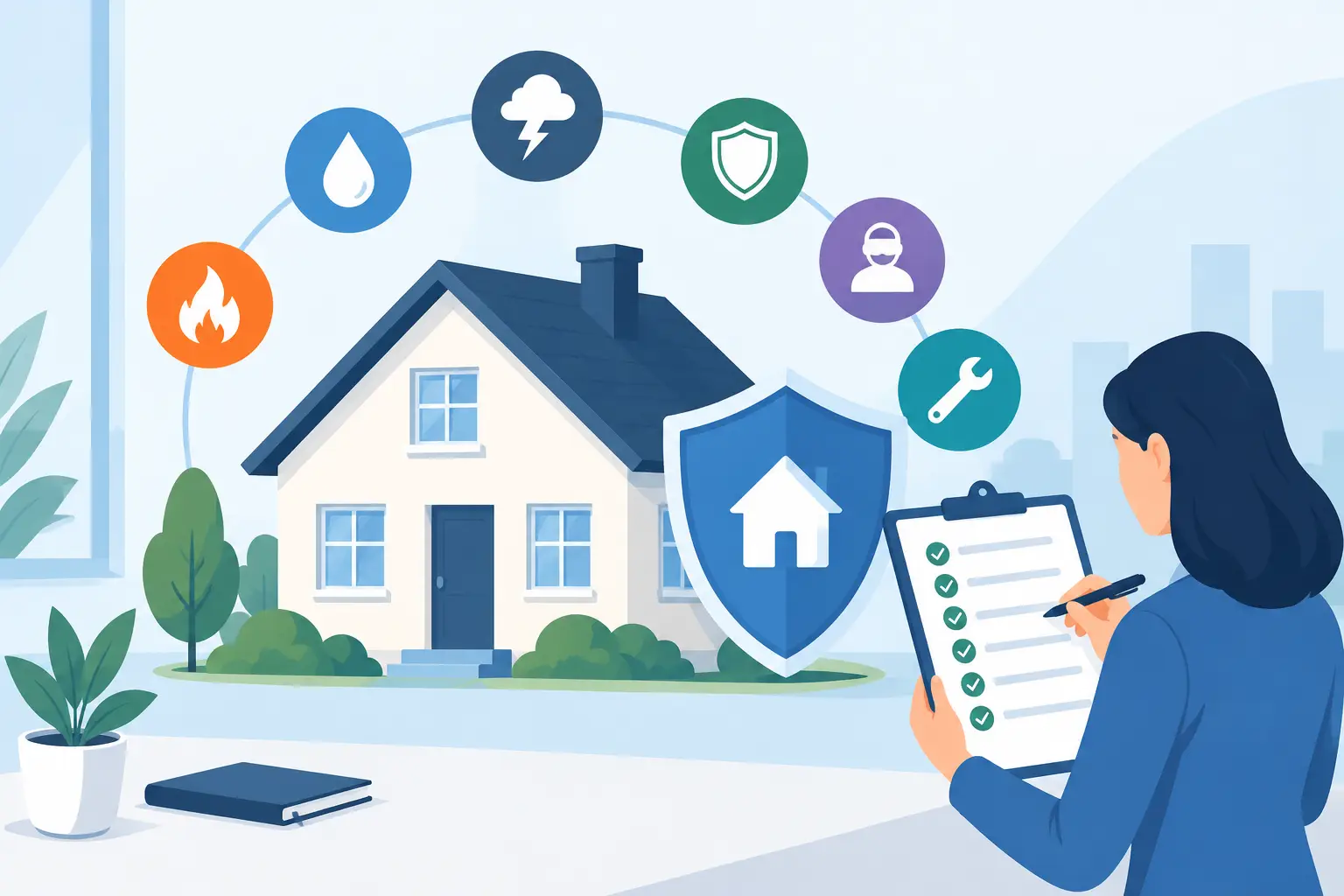
When your policy's expiration date approaches, it's easy to simply approve the figure in the renewal offer. However, the home insurance renewal process isn't just about extending the same coverage for another year. Your home's value, your belongings, the condition of the building, and your living arrangements may have changed. Coverage that seemed sufficient a year ago may no longer cover the full cost when a loss occurs today.
A proper renewal requires reading the scope, limits, and exclusions together rather than evaluating the price alone. This way, you won't pay for unnecessary additional coverage, and you won't give up the protection you truly need.
Don't leave your home to chance! Take precautions against unexpected risks today.
Get a quote from Hami Sigorta now and secure your home!
Home insurance protects your building, your household goods, and your liability to third parties according to the additional coverage you choose when the risks specified in the policy occur. However, the amounts in the policy may not always reflect current market conditions. Especially when construction costs, furniture, and electronics prices rise, continuing with old values can create the risk of underinsurance.
Underinsurance is one of the most common problems when a loss occurs. For example, if your home's actual reconstruction cost is 4 million TL but the policy states 2 million TL, in a major loss the payout may fall short based on the policy's proportions. Therefore, during renewal, you should look not only at the change in premium but also at how the insured amount is determined.
Priorities also differ for tenants and homeowners. While a homeowner needs to assess the building value and structural risks, a tenant can focus more on needs such as belongings, electronic devices, potential damage to neighbors, and temporary accommodation. How long the home stays vacant, whether it's used as a summer house, or a work-from-home arrangement can also affect the assessment.
The building value is not the sale value of the home. Instead of the land value, the cost of rebuilding the structure after a loss is taken as the basis. Sale prices of homes in the same neighborhood may vary for different reasons; the policy should take into account square meters, construction class, and current construction costs.
Especially if you've been renewing the same policy for a long time, this figure needs to be checked. The insurance company's automatic update can be helpful, but if you've made renovations, increased enclosed space, or made improvements that raise costs in your home, it's important to report this separately.
Household contents coverage provides protection for furniture, white goods, electronic devices, clothing, and other movable assets within the policy's scope. A newly purchased television, computer, furniture, or valuable device may make last year's contents limit insufficient.
Rather than collecting every single receipt, it helps to think about your belongings room by room. Roughly calculate the current replacement cost of items in the kitchen, living room, bedrooms, and workspace. If you have special items such as artwork, collections, jewelry, or high-value electronics, ask separately whether these are covered by standard limits.
Water leakage, pipe bursts, and water from upper floors are common in home losses. However, not every water-related loss is assessed the same way. Coverage and exclusions for internal water, plumbing, appliance connections, roof leaks, or negligence-related situations may differ from policy to policy.
If you live in a building with old plumbing, narrowing this coverage for a lower premium could lead to unexpected costs. On the other hand, if the plumbing was recently fully renovated, the building information in the policy should be updated. Don't forget that maintenance responsibilities before a loss still apply; insurance is not a maintenance service that automatically covers every problem that goes unnoticed for a long time.
Don't leave your home to chance! Take precautions against unexpected risks today.
Get a quote from Hami Sigorta now and secure your home!
Compulsory Earthquake Insurance, known as DASK, provides coverage within a certain framework for earthquakes and certain damages directly caused by earthquakes. Home insurance, depending on the package chosen, can play a complementary role in areas such as additional risks that may arise after an earthquake, damage to belongings, or building value exceeding the DASK limit.
These two products are not alternatives to each other. Your DASK policy must be issued with current and accurate address information. When renewing your home policy, clarifying the scope of earthquake coverage, its deductible, and at what point it kicks in alongside DASK reduces uncertainty at the time of a loss.
Although some coverages appear to be included in the package, their sub-limits may be below your expectations. Conditions such as requiring signs of forced entry on doors or windows for theft; exclusions such as sudden voltage changes or liquid contact for electronic devices may vary from policy to policy.
Glass breakage, locksmith service, key loss, and small home assistance services are also add-ons that make daily life easier. These won't cover the cost of a major loss, but they provide practical benefits, especially in city life. Removing add-ons you don't need can lower the premium; however, choosing only the cheapest option for risks you frequently encounter may not be the right approach.
A water leak from your home damaging the floor below can create financial liability toward third parties. Personal financial liability coverage can provide important protection for such claims within the framework of policy terms.
In apartment living, the limit of this coverage is especially valuable. If the apartment below has expensive renovations, electronic equipment, or commercial use, the cost of what seems like a minor incident can grow. During renewal, assess not just the existence of the coverage but whether its limit is appropriate for the potential level of damage.
Two coverages with the same title may not have the same payment terms. A deductible means that a certain portion of the loss is covered by the insured. A higher deductible lowers the premium in some cases; however, it increases the amount that comes out of your pocket for small and medium-sized losses.
Special conditions, waiting periods, the policy's rules for vacant homes, and the claims notification process also affect your decision. When purchasing a policy, rather than just looking at the price table, also consider who you can reach and how quickly when a loss occurs. Accessible advisory support that provides explanations when you need it makes a significant difference, especially during a first claims experience.
Starting your review a few weeks before your policy's expiration date is ideal. This timeframe provides enough room to compare your current policy, note changes in your home, and evaluate offers from different companies with the same coverage structure. With last-minute renewals, quick price decisions may come to the forefront instead of coverage details.
When comparing, don't evaluate offers' premiums on a single line. Place building and contents values, earthquake additional coverage, water damage, theft, liability limit, deductible, and assistance services side by side. A lower-priced offer may be the right choice; however, if the reason is a lower building value or narrower coverage, the difference will emerge at the time of a loss.
It's also important that the address, independent section, usage type, and structural features in the policy information are accurate. If you've rented out the home, started working from home, or will leave it vacant for a long time, share this information. Incorrect or incomplete declarations can complicate the claims process.
You don't have to rush when making decisions for your home, the belongings you use every day, and the living space you share with your neighbors. By comparing coverages and offers clearly with Hami Sigorta experts, you can choose protection that fits your budget and turn the renewal date from a formality into an opportunity for a safer year.
Don't leave your home to chance! Take precautions against unexpected risks today.
Get a quote from Hami Sigorta now and secure your home!
Published: 19 November 2026
Our Blogs
Latest Blog Articles