
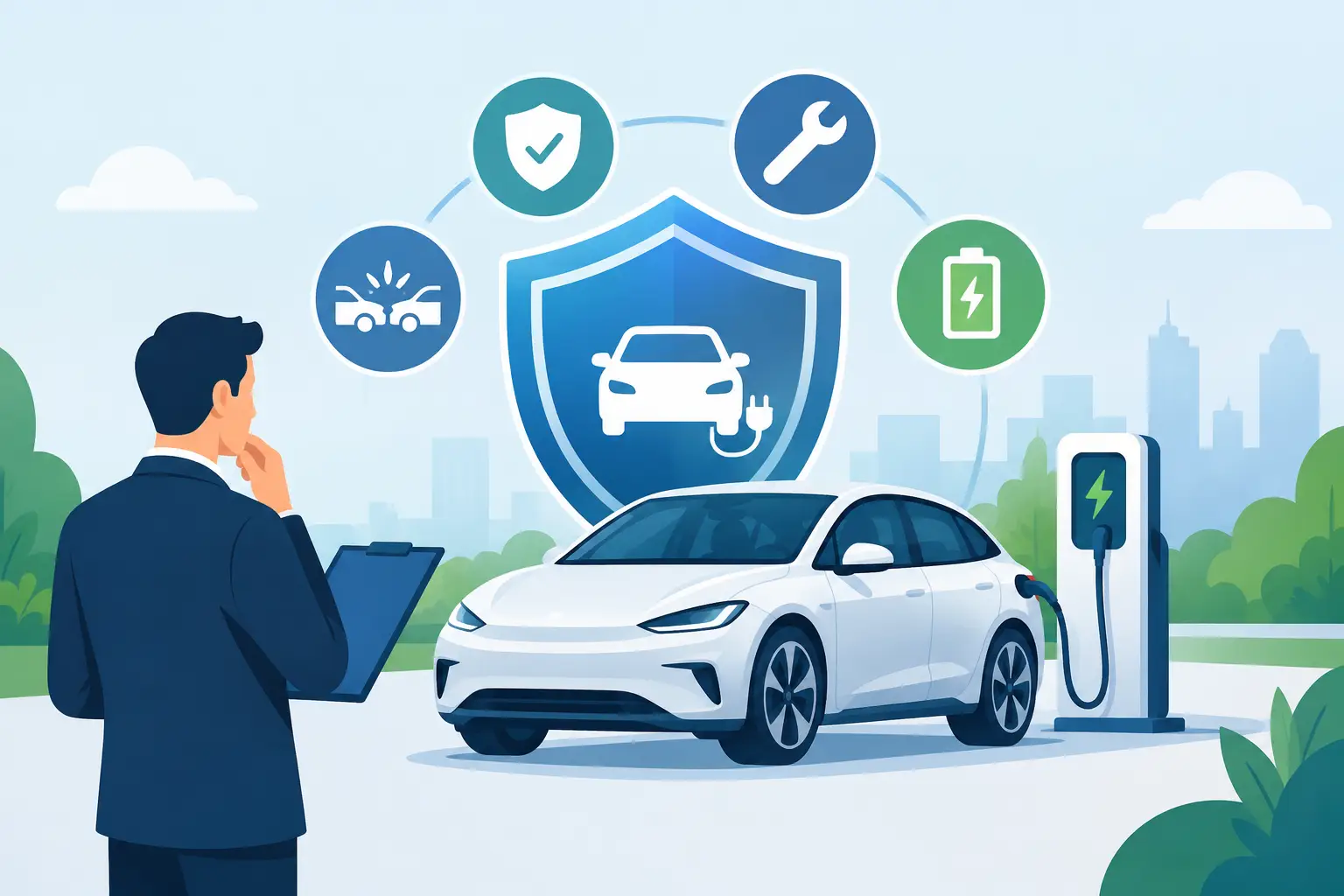
When owning an electric vehicle, the most expensive risk is not always damage to the bodywork. After an accident, when the battery pack, high-voltage system, charging equipment, or specialized service procedures come into play, repair costs can differ from what you expect. For this reason, electric vehicle insurance should be chosen not only by looking at the policy price, but by evaluating the vehicle's technology, usage patterns, and coverage details together.
Compulsory traffic insurance is a legal requirement for every vehicle, whether electric or internal combustion. Comprehensive coverage (kasko), on the other hand, is an optional product that protects against damage to your vehicle according to the scope of your policy. Choosing the right comprehensive coverage for electric vehicles is especially important due to high-cost parts and service processes.
Compulsory traffic insurance issued for an electric vehicle covers bodily and material damages caused to the other party in an accident, within legal coverage limits. Situations such as damage to your own vehicle, battery damage, or theft of the charging cable are not the subject of traffic insurance.
This is where comprehensive coverage comes in. Comprehensive policies can generally cover risks such as collision, impact, fire, theft, natural disasters, and malicious acts by third parties. However, the real difference with electric vehicles is how these general headings apply to the battery and electronic components. Each insurance company's product scope, deductibles, and special conditions may differ. Therefore, a more accurate question than "Is comprehensive coverage available for electric vehicles?" is: "Under what circumstances and to what extent does this policy protect the expensive parts of my vehicle?"
The battery is one of the most expensive components of an electric vehicle. Be sure to ask how the battery will be treated under the policy in damages such as accident, fire, flood, or theft. In some damages repair may be possible, while in others battery pack replacement may be required.
Here it is necessary to distinguish between the manufacturer's warranty and comprehensive coverage. Failures originating from production, capacity degradation, aging, and technical issues under warranty are mostly the domain of the manufacturer's warranty, not comprehensive coverage. Comprehensive coverage focuses more on damages arising from sudden and external factors.
Electric vehicles may have a repair process that requires expertise due to high-voltage systems. The policy's contracted service network, the options in your city, and the conditions for using authorized services are important.
Especially for new, imported, or models with a limited service network, where the vehicle will be towed and where the repair will be done directly affects the damage experience. Choosing a policy that overly restricts service choice in exchange for a lower premium can lead to lost time in the event of damage. On the other hand, a wide service network may not be equally necessary for every driver; the region where you use your vehicle is the determining factor.
Headlights, sensors, cameras, charging ports, electronic control units, and body parts can create high costs in electric vehicles. In the comprehensive coverage quote, learn the practice regarding original parts, equivalent parts, or repair methods after damage.
The age of the vehicle, market value, and purpose of use become important here. For a vehicle that can be considered new or nearly new, the original parts approach is more valuable for many drivers, while for an older vehicle the premium budget may take priority. The most accurate choice is the one that protects both the vehicle's value and your expectations.
Portable charging cables, adapters, and some accessories may be kept separate from the vehicle in daily use or may be damaged outdoors. Ask how these equipment are handled in the policy in case of theft or damage.
The wall-mounted charging unit at home or the workplace, on the other hand, may not always be a natural part of vehicle comprehensive coverage. The ownership of the unit, the installation location, and the cause of damage can change the coverage. For a fixed charging unit, the electronic device and installation coverages in your home or workplace policy may need to be evaluated separately.
Running out of charge in an electric vehicle may not be treated the same way as running out of conventional fuel. While some assistance services offer towing support, some policies may have limits on range, number of services, or towing distance.
If you use your vehicle frequently on long journeys, it is useful to learn whether the towing service is provided to the nearest charging station or to the preferred service. Although charging planning is the driver's responsibility, strong assistance service provides real peace of mind for unexpected road closures, route changes, or technical issues.
Concern about contact with water is common for electric vehicles. However, what is determining is not whether the vehicle is electric, but the nature of the damage, the effect of the water level, and the policy conditions. Check whether flood, inundation, and fire coverages are included in the policy and whether any deductibles apply.
Especially in regions with a high risk of heavy rainfall, indoor parking availability, daily parking area, and usage route should also influence your decision. Comparing the price difference between standard coverage and extended coverage against these real risks would be more sensible.
Providing a replacement vehicle after damage is an important coverage for drivers who do not want to be left without a vehicle. However, the number of days the replacement vehicle will be provided, its segment, and in which cases of damage it will be offered may vary from company to company.
Do not act on the assumption that you will definitely be allocated an electric replacement vehicle while your electric vehicle is in service. If you have such a need, ask clearly at the quote stage. For people whose daily transportation is entirely dependent on their vehicle, the replacement vehicle duration may be more valuable than a premium difference of a few hundred liras.
Electric vehicle insurance price is not determined solely by the vehicle's list price. The vehicle's make and model, spare parts cost, repair duration, the driver's damage history, the province they live in, usage intensity, and the selected coverages affect the premium. Entering the vehicle's current value correctly when determining the comprehensive coverage amount is also important.
The cheapest quote is not always the most economical quote. A low-premium policy may have a narrow service network, high deductible, limited replacement vehicle right, or missing additional coverage. On the other hand, the needs of a driver who drives low mileage in the city and uses safe indoor parking are not the same as those of a driver who travels between cities every day. When making a comparison, the coverage limit, special conditions, and service scope should be read together alongside the premium.
After an accident or damage, first ensure life safety, call 112 where necessary, and make the scene safe. In mutual material damage accidents, if conditions are suitable, fill out the accident detection report completely; take photos and videos. If there is damage in the battery area of the vehicle, burning smell, smoke, liquid leakage, or a high-voltage warning, do not intervene with the vehicle again and wait for the guidance of authorized teams.
Make the damage notification without delay through the time and channels specified in your policy. Confirming the assistance service coverage before calling a tow truck helps prevent cost disputes that may arise later. After the damage file is opened, ask for information about the service selection, expert examination, and repair process; record the procedures to be performed especially on the battery and electronic components.
No. Compulsory traffic insurance for electric vehicles is a legal requirement like other motor vehicles. Premium and quote conditions may vary according to vehicle information and driver profile.
Not every battery failure is covered. Sudden damages caused by accident, fire, or external factors may be evaluated according to policy conditions. Performance degradation due to use, production defects, or failures under warranty are generally subject to different processes.
This situation varies by policy and in most cases should be evaluated separately. For a fixed charging unit, the scope of home or workplace insurance should also be examined.
When getting a quote for your electric vehicle, compare not only today's premium but also the support you will receive when damage occurs tomorrow. Evaluating coverages side by side with Hami Sigorta's expert consultancy helps you choose more clearly the policy that suits your vehicle and usage habits.
Published: 18 November 2026
Our Blogs
Latest Blog Articles